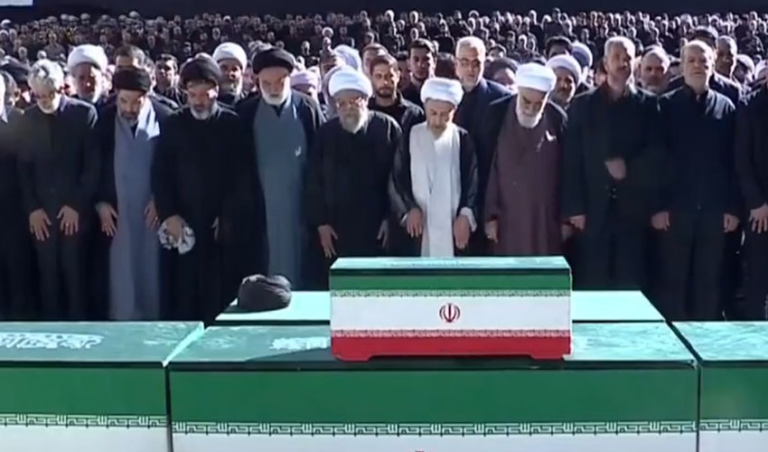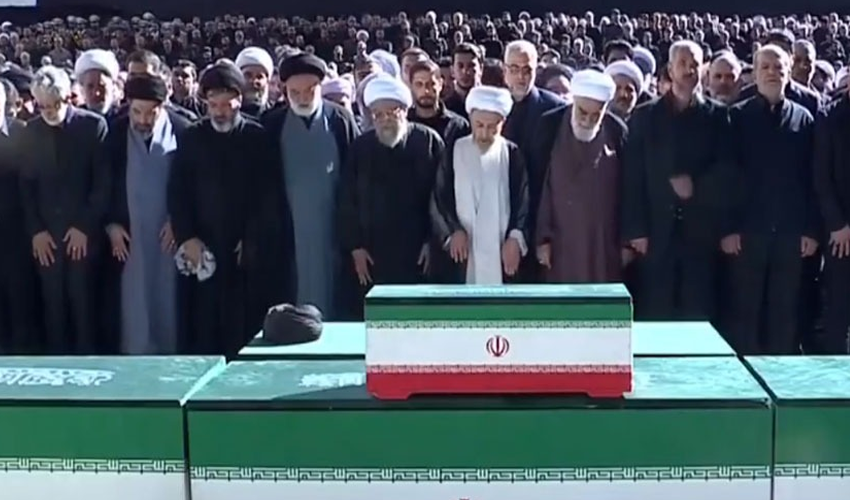
Funeral Prayers Offered at Tehran’s Grand Mosalla Complex
Funeral prayers for Iran’s Supreme Leader Ayatollah Ali Khamenei were held at the Imam Khomeini Grand Mosalla complex in Tehran, drawing millions of mourners from across the country. Iranian President Masoud Pezeshkian, Parliament Speaker Mohammad Bagher Ghalibaf, and several other senior state officials attended the ceremony.
The funeral prayer for the late Supreme Leader was led by Ayatollah Jafar Sobhani, according to Iranian state media. Witnesses described an atmosphere of overwhelming grief, with mourners visibly in tears throughout the ceremony.
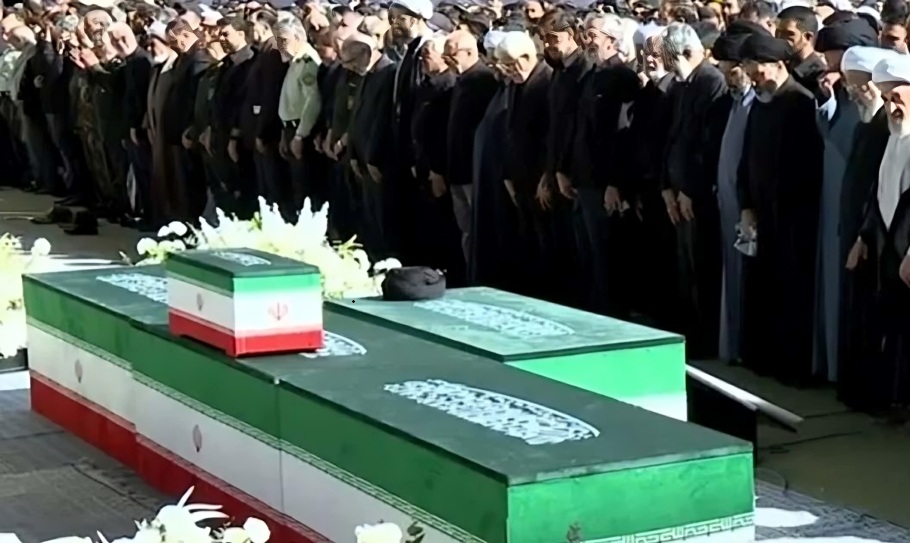
Family Members Laid to Rest Alongside the Supreme Leader
Funeral prayers were also offered for four members of Khamenei’s family who lost their lives alongside him: his daughter, daughter-in-law, son-in-law, and young granddaughter.
Three of Khamenei’s sons — Mostafa, Meysam, and Masoud — were present at the funeral prayers. However, Iran’s new Supreme Leader, Mojtaba Khamenei, did not make a public appearance, reportedly due to serious security concerns.
International Delegations from 100 Countries Attend
Delegations from around 100 countries took part in the funeral proceedings, underscoring the global significance of the event. In response, Iran declared a national public holiday, with July 8 designated as an official day of mourning.
Pakistan’s Leadership Pays Respects
Two days before the main funeral prayer, Pakistan’s Prime Minister Shehbaz Sharif and Field Marshal Asim Munir attended the funeral ceremony on the invitation of Iranian President Dr. Masoud Pezeshkian.
The Prime Minister expressed complete solidarity with Iran’s new Supreme Leader, Ayatollah Sayyid Mojtaba Hosseini Khamenei, President Pezeshkian, and the people of Iran over the national tragedy, offering prayers for the late leader’s elevated status and forgiveness. PM Shehbaz Sharif also recorded his condolences in the official book of remembrance for the late Supreme Leader.
Mourners Chant Slogans of Revenge and Justice
Streets surrounding the funeral site and across Tehran were filled with mourners dressed in black, many waving red flags symbolizing the pursuit of justice and revenge. Thousands gathered in the courtyard of the Grand Mosalla, chanting slogans against the United States and calling for retribution, creating a charged atmosphere across the capital.
What Happens Next: Funeral Procession and Burial Schedule
A major funeral procession is scheduled for Monday morning, after which the body will be transferred to Qom. From there, the remains will be taken to the Iraqi cities of Najaf and Karbala before the final burial takes place on July 9 in Mashhad, the late Supreme Leader’s hometown.
You Must Read This News: 21 terrorists killed in North Waziristan IBOs in the last 72 hours: ISPR
Background: The February 28 Strike That Killed Khamenei
Ayatollah Khamenei was killed in a joint US-Israeli strike on February 28 this year. Iran moved quickly to name a successor, appointing a new Supreme Leader by March 8 — within roughly a week of his death — though the burial of the late leader was delayed for months amid the ongoing war and security situation.
Before the funeral prayers, the bodies of Ayatollah Khamenei and his family members who died in the same strike were placed in Tehran for public viewing, allowing citizens to pay their final respects.
About the Author