Important 2,000-Year-Old Roman Site Discovered in Germany
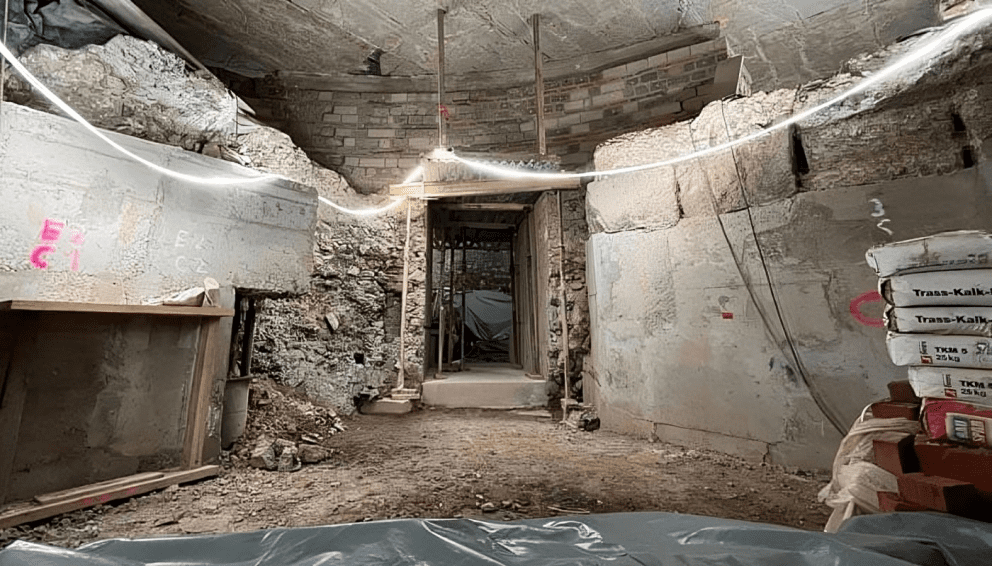
An important Roman archaeological site dating back nearly 2,000 years has been discovered during construction work in Germany. The discovery was made accidentally while workers were carrying out development work for the LVR Jewish Museum. What began as a routine construction project has now turned into a significant historical find that is drawing attention from archaeologists and historians alike.
Experts say the remains belong to the Roman period and likely date back to the first century AD, offering valuable insights into the region’s ancient past.
Accidental Discovery During Construction Work
The historic site was uncovered during excavation activities linked to the expansion of the LVR Jewish Museum. As construction crews dug into the ground, they came across unusual stone structures that prompted further investigation.
Archaeologists were immediately called to examine the site. Upon careful inspection, they identified several important remains, including a private altar, extensive building foundations, and a partially preserved stone staircase.
Officials described the discovery as both unexpected and highly significant, as it adds new details to the understanding of Roman presence in the region.

Stone Staircase Linked to Roman Praetorium
One of the most remarkable discoveries at the site is a stone staircase believed to be the oldest structure found so far. Only the middle portion of the staircase remains intact, while its upper and lower ends have not yet been fully identified.
Experts suggest that the staircase may have connected the Praetorium — the official residence of the local Roman governor — to the Rhine River. If confirmed, this would indicate that the structure played an important administrative and logistical role during the Roman era.
However, archaeologists caution that further analysis is needed to definitively determine the exact purpose and layout of the staircase.
Private Altar and Building Foundations Unearthed
Alongside the staircase, researchers uncovered a private altar, which is believed to have been used for religious or ceremonial purposes during Roman times. The presence of a private altar suggests that the site may have been part of a larger residential or administrative complex.
In addition, extensive building foundations were found beneath the construction site. These structural remains indicate that the area once housed significant Roman architecture.
Archaeologists are carefully studying the foundations to determine the size, design, and function of the buildings that once stood there.
Confirmation of First-Century Roman Origins
Archaeological experts have confirmed that the site dates back to the Roman period in the first century. This era was marked by Roman expansion across large parts of Europe, including territories that are now part of modern-day Germany.
The region along the Rhine River was strategically important during Roman rule, serving as both a military frontier and a trade route. Discoveries like this provide valuable evidence of how Roman officials managed administration, infrastructure, and daily life in the area.
You must read this read news: Earthquake Tremors Felt in Islamabad, Several Cities
Historical Significance of the Discovery
This 2,000-year-old discovery offers an important glimpse into Roman governance and settlement patterns in northern Europe. The possible connection between the staircase and the Praetorium suggests that the site held administrative importance.
Experts believe that continued excavation and research may reveal additional artifacts, offering further insights into the lives of Roman officials and residents in the region.
The discovery also highlights the importance of archaeological monitoring during modern construction projects. Many historical sites remain hidden beneath urban areas, and accidental finds often reshape historical understanding.
Conclusion
The discovery of a nearly 2,000-year-old Roman site during construction work in Germany has opened a new chapter in the study of the region’s ancient history. With findings such as a stone staircase, private altar, and extensive building foundations, archaeologists now have valuable material to examine.
As research continues, historians hope to uncover more details about the site’s connection to Roman administration and infrastructure. This remarkable find not only enriches historical knowledge but also demonstrates how the past can resurface unexpectedly during modern development.
Follow Us On Social Media Channels:-
Like On FACEBOOK
Visit our WEBSITE
Subscribe to YouTube
Follow On TWITTER
Follow On INSTAGRAM
About the Author